Why I Follow Christ
My Testimony: From Atheist to Evangelist
Like the vast majority of people in my generation, I grew up thinking that faith and reason were like oil and water. Attending a math and science academy and living in a non-religious household, I was always the skeptic, especially when it came to God. To me, faith seemed outdated, almost laughable. I carried this skepticism like a badge of honor.
My skepticism only intensified when I saw the news and read history books. Religious hypocrisy, wars and genocides in the name of God. People claiming to be spiritual but acting anything but. Time and time again I encountered peers who wore crosses but were far from Christ, engaging in every imaginable mortal sin, thinking that if they just said a few Hail Marys it would all be forgiven. It left an incredibly sour taste in my mouth, making it so easy for me to double down on my non-belief.
But even as an atheist, I had a deep yearning for purpose. Seeking purpose in anything but God, I tried to find it elsewhere, diving headfirst into causes like social justice. I even created a page that got 800,000 followers on Facebook in 2017. That page got a billion impressions that year, inflaming race wars and generating anti-cop hatred. I have to admit, I felt so alive when I was generating this outrage and chaos. I felt like I was playing, dare I say, God.
I had thousands of people waiting patiently every day for new red meat to jump on. It was so addicting. But the euphoria came crashing down when I realized I was only contributing more to the madness that I had intended to be a positive response to. I was so against Trump's election, and then I realized I was playing Trump's game, except just on the other side. And guess what the Facebook page was called? Woke Folks. You can't make that up.
I realized there was no way I wanted "Woke Folks" to be part of my life and legacy, so I totally abandoned it cold turkey. My secular way of repenting for my sins as a hyper-partisan was to co-found a nonprofit focused on empowering young people to become non-partisan democracy reformers. I had something like a religious passion for ranked choice voting and open primaries (I wanted it to be like a silver bullet). I got a high from now not just feeling superior to the Republican Party, but also the Democratic Party. But trying to build this new secular movement felt empty in a different way. See: Don't Advance Anti-Christian Causes for understanding how even well-intentioned movements can become false lights.
Speaking of feeling empty, becoming successful in my twenties by worldly standards did not fill the God-shaped hole in my heart. I landed a job at Google, was quickly promoted to software engineering lead of a small team on Google Cloud, earned a spot on Forbes 30 Under 30. But let me tell you, despite all the accolades, there was still an empty void inside of me. It's like having a decked-out mansion full of everything you once wanted as a kid, but still feeling like there's nothing meaningful inside. Ending my life was, unfortunately, a common thought that crossed my mind.
Trust me when I say that I get why we've gotten to this precarious point where rates of depression and suicide amongst young men and women are skyrocketing. We are in the middle of what I would call a meaning crisis, and those who grew up in this godless society are the collateral damage.
The Turning Point
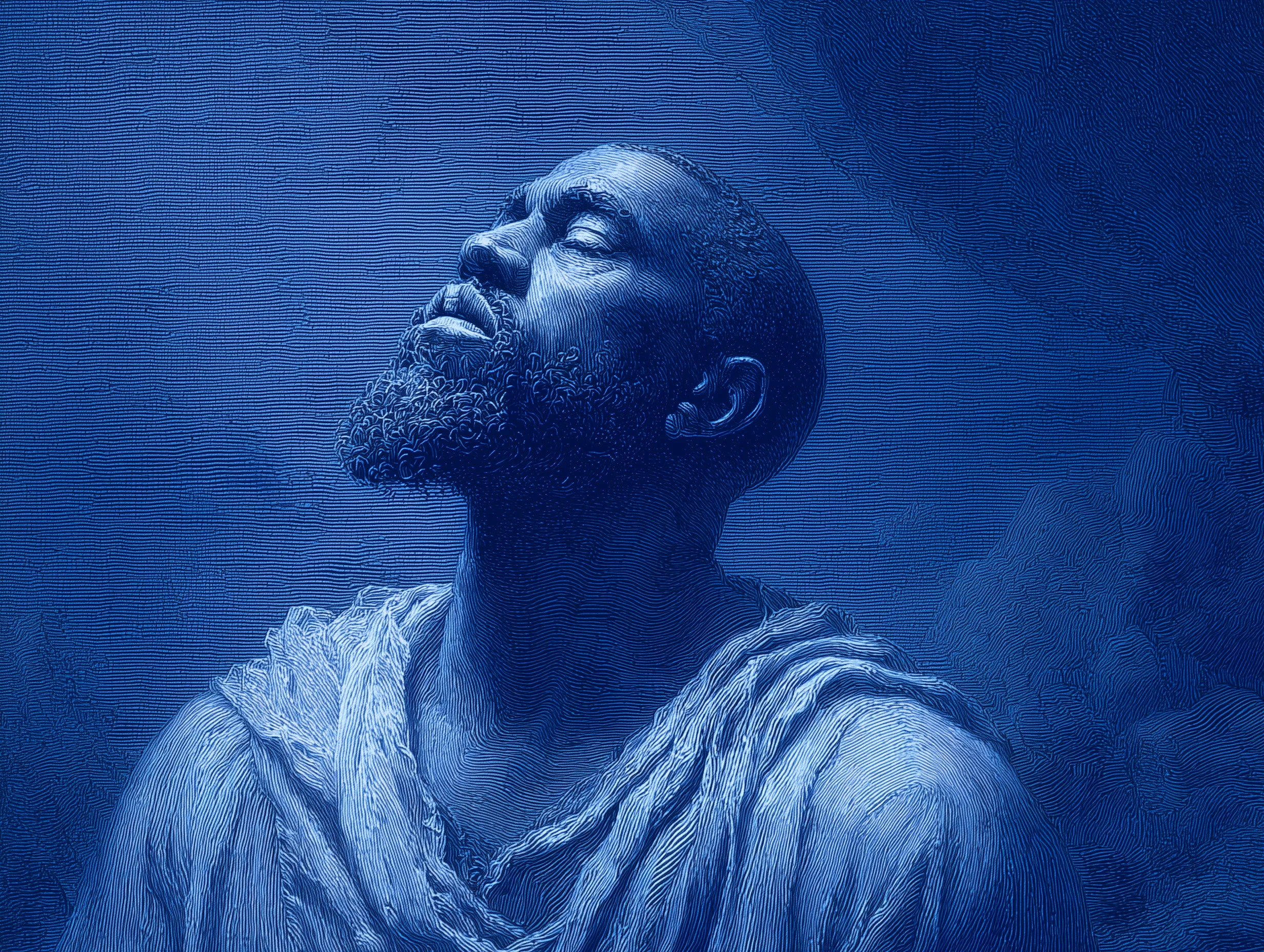
In 2021, something unexpected happened. I found myself listening to Kanye West's album "Jesus is King," two years after it was already released. I don't know why I played it, but that music hit me differently. It was so beautiful that I couldn't help but wonder if it bore the mark of something (or someone) divine. Watching this music performed by Kanye's Sunday Service Choir on YouTube felt like a direct communication with the divine. I couldn't explain it any other way.
Around this time, I also met individuals who truly walked their faith: people I would never consider lukewarm Christians. People like my friend Matthew, who works with the Vatican, and Marcus, another member of Forbes 30 Under 30 who has devoted his life to Christ by becoming an ordained minister. Matthew and Marcus didn't just talk a Christly talk; they lived their faith. They took great steps to eliminate worldly temptation from their lives. They are all in on walking the divine path.
Their actions ignited a curiosity in me: a spark that had been extinguished by my many disappointing experiences with so-called Christians, lukewarm Christians in the past. That spark of curiosity turned into a flame during a miraculous healing ceremony earlier this year. Long story short, I helped someone who previously couldn't feel their legs for years feel them again for the first time. That experience shook me to my core.
After that point, I started seeing God's presence everywhere, even in the smallest things. It was as if I was seeing life in full color for the first time after living my life in just black and white. It finally hit me that no political ideology, no worldly achievement could replace the peace and purpose that the teachings of Christ offer.
My skepticism around faith began to crumble. I realized that the real risk isn't believing in God; the real risk is living as if He doesn't exist. I realized that if we don't start putting God first in our families, obediently following the teachings from the Sermon on the Mount, America and our world altogether will continue sinking into the quicksand of moral relativism, materialism, and celebrity worship.
Here's the reality: everyone worships something, whether it's themselves, money, or something else. But the only path to peace today is to worship the Most High God (the head of all existence, the divine orchestrator). See: Reserve the Pedestal for God for understanding how to avoid modern idolatry.
This realization launched me into consistent writing about faith and God's infinite relevance for our times. As people make AI their gods and America enters what feels like a tribulation period, we need God more than ever. We're approaching a dark age that will drive millions of souls to Christ.
A coming 'God Wave' will sweep across the world as human systems fail and divine truth becomes undeniable.
I feel called to be a small part of making that happen.
After all, it's in my blood. At the end of 2024, I discovered that my great-grandfather in China was a pastor during a time when Christianity faced increasing persecution. The same Spirit that sustained him through trials seems to be calling me to bear witness in our own age of spiritual warfare.
What began as musical and intellectual curiosity in 2021 has become a burning conviction: Christ is not just historically true; He is the answer our generation desperately needs. And truth without action is meaningless. That's why I don't just believe in Christ; I follow Him.
Disclaimer: To whatever extent the following evidence and arguments resonate with you and compel action, I give all glory and credit to God. Any mistakes, improper arguments, or shortcomings in this analysis are entirely my responsibility. I remain open to your feedback and correction, as I am still learning and growing in my journey of following Christ.
Why I Follow: The Evidence That Compelled Action
My personal journey led me to investigate the intellectual foundations for faith. What I discovered was that following Christ rests on multiple converging lines of evidence and argument that demand not just mental assent, but life transformation. While my heart was moved by experience, my mind was convinced by reason, and my will was compelled to action. Here's the comprehensive case that not only convinced my intellect but transformed how I live:
I. The Philosophical Foundation
The rational arguments that provide the intellectual scaffolding for belief.
As I began investigating the claims of Christianity, I discovered that faith wasn't the enemy of reason; it was reason's natural culmination. The philosophical arguments for God's existence provided the logical foundation I needed as a skeptical engineer.
The Cosmological Argument
Why the existence of anything at all points to God.
The universe had a beginning: this isn't just biblical teaching, it's confirmed by modern cosmology. The Kalam Cosmological Argument follows simple logic:
- Everything that begins to exist has a cause
- The universe began to exist (supported by Big Bang cosmology)
- Therefore, the universe has a cause
This cause must be spaceless, timeless, immaterial, incredibly powerful, and intelligent (characteristics that align perfectly with the God of Christianity). Einstein's general relativity and Hubble's observations support the premise that the universe had a beginning.
But the mere existence of the universe wasn't the only thing that caught my attention as an engineer. The intricate precision of how everything works together suggested something even more profound.

The Design Argument
How the fine-tuning of reality reveals an intelligent architect.
The intricate complexity and apparent purposefulness in nature point to an intelligent designer. Consider:
- The fine-tuning of physical constants that allow life to exist
- The informational content in DNA
- The precise calibration of cosmic conditions
- The mathematical describability of the universe itself
The fine-tuning is extraordinary: if fundamental constants like gravity and electromagnetic forces were altered even slightly, life would be impossible. The mathematical precision required suggests intentional design rather than random chance.
The Word-Based Universe
How information reveals the fundamental nature of reality.
Perhaps most compelling to me as an engineer is what John Lennox calls the "word-based universe." The opening of John's Gospel ("In the beginning was the Word") isn't just theology; it's describing the informational foundation of reality itself.
Consider that Einstein himself was puzzled by what he called "the most incomprehensible thing about the universe": that it's comprehensible at all. Why should the universe be mathematically describable? Why can we use the language of mathematics to understand physical laws?
The answer becomes clear when we recognize that information is fundamental to reality, yet information itself is non-material. As Lennox notes, "if information is not in the end material, then no material explanation is going to work for it." The DNA molecule isn't just complex; it's linguistically complex, containing a 3.4 billion letter word in a chemical alphabet where every letter must be in precisely the right order.
This represents what may be the death blow to materialism, as physics itself demonstrates that information cannot be reduced to mere physics and chemistry. We live in an information-based universe that points directly to an intelligent, communicating Creator: the Word through whom all things were made.
Just as compelling to me personally was the question that had haunted my activist days: why did I feel so strongly that some things were truly right or wrong? This led me to what many consider the most powerful philosophical argument for God.
The Moral Argument
Why objective right and wrong can only exist if God exists.
Without God, objective moral values cannot exist; they become merely subjective preferences. Yet we all intuitively know that some things are truly right or wrong. The moral argument demonstrates:
- If God does not exist, then objective moral values do not exist
- Objective moral values do exist
- Therefore, God exists
This isn't just philosophical speculation; it explains why my activism felt empty when divorced from transcendent purpose.
II. The Historical Evidence
The documented facts that demonstrate the Bible's truth claims.
While philosophy provided the logical foundation, I needed more than abstract arguments. As someone trained in data analysis, I wanted concrete, verifiable evidence. What I found in the historical record was nothing short of remarkable.
Fulfilled Prophecy
How predictions made centuries in advance came true with mathematical precision.
The accuracy of biblical prophecies provides compelling evidence for divine authorship. Consider:
- Daniel's detailed predictions of Middle Eastern empires spanning five centuries
- Over 300 Messianic prophecies fulfilled in Jesus Christ
- Statistical calculations showing the probability of chance fulfillment as astronomically small (1 in 10^157 for multiple prophecies)
The Dead Sea Scrolls confirm these prophecies were written centuries before their fulfillment, eliminating post-facto additions.
But of all the historical claims in the Bible, none is more central (or more thoroughly documented) than the resurrection of Jesus Christ. This single event, if true, changes everything.
The Resurrection
Why the best-attested miracle in history demands a response.
Multiple lines of historical evidence support Jesus' resurrection:
- The empty tomb discovered by women (whose testimony was considered unreliable in first-century Judaism)
- Post-resurrection appearances to multiple witnesses
- The transformation of disciples from fearful followers to bold martyrs
- The early creedal formula in 1 Corinthians 15, dating within 3-5 years of the crucifixion
- The failure of contemporary opponents to produce Jesus' body
Even skeptical scholars acknowledge the basic historical facts surrounding Jesus' death and the disciples' belief in his resurrection.
III. The Experiential Evidence
The personal encounters that make faith real and transformative.
While historical and philosophical arguments convinced my mind, it was personal experience that captured my heart. The transformation I witnessed (both in myself and others) provided a different kind of evidence, one that speaks to the deepest parts of human existence.
Religious Experience and Transformation
How encounters with the divine change lives in measurable ways.
My own experience mirrors countless others who have encountered the divine. The argument from religious experience includes:
- Dramatic life changes following religious conversion
- Former atheists becoming believers based on personal experience
- Consistent reports of divine encounters across cultures and time periods
- The transformative power of Christian faith in addressing addiction, depression, and other life challenges
Experience Often Precedes Arguments
Why intellectual reasons frequently follow personal encounters with God.
As Oxford mathematician John Lennox observes, "Intellectually one's reasons for God often come after one's experience of God." This insight resonates deeply with my own journey: the philosophical arguments I've outlined here largely came after my personal encounter with divine reality, not before.
This pattern reveals something profound about how God works. If faith required mastering complex philosophical arguments first, as Lennox notes, "I would doubt whether that God was worth believing in." Instead, God meets people where they are: the Oxford professor and the illiterate former boxer alike can encounter the same transformative truth.
Lennox shares the story of Stan Ford, an ex-fairground heavyweight boxer who "couldn't read or write" but became a Christian at 19 and later "could give you a summary by heart of every chapter in the Bible." Stan became "a living example of what God can do to a person," demonstrating that divine encounter transcends educational background or intellectual sophistication.
But personal transformation wasn't the only experiential evidence I encountered. The miraculous healing I participated in opened my eyes to a realm of divine intervention that continues today.
Modern Miracles and Healings
Why supernatural interventions still occur in the contemporary world.
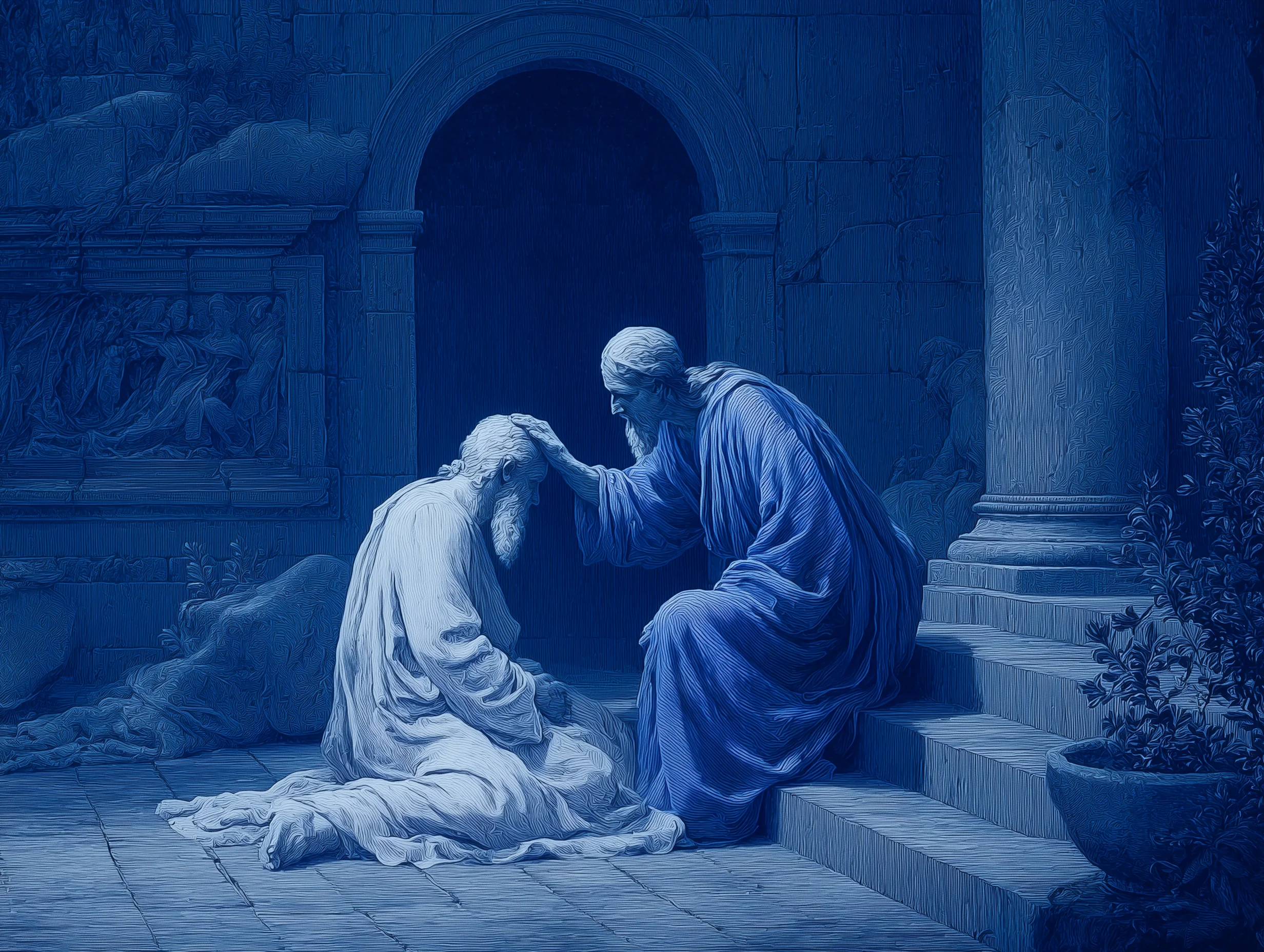
Contemporary accounts of miraculous healings continue to be reported:
- Medically documented healings with no natural explanation
- Miraculous rescues and interventions
- Answers to prayer that defy statistical probability
- Mass evangelistic events accompanied by supernatural phenomena
Modern apostles like Delmar Coward Jr. demonstrate this supernatural reality in practice. His ministry has documented miraculous healings including casting out the spirit of Down syndrome from a young man who was transformed overnight, healing a woman dying from AIDS who was completely healed within two weeks, and praying for an autistic child who went from making 20s in school to 90s after deliverance. Coward's approach to faith (operating in absolute authority with no room for religious limitation) exemplifies what happens when believers understand their covenant rights and demand divine intervention rather than begging for mercy.
Also, my own experience with the healing ceremony fits this pattern of modern miraculous intervention.
Another category of experiential evidence that particularly intrigued me as someone interested in consciousness and the nature of reality came from studying near-death experiences.
Near-Death Experiences
What happens when people encounter the divine at the threshold of death.
Research into near-death experiences reveals common elements aligning with Christian theology:
- Encounters with a being of light identified as Jesus
- Experiences of unconditional love and peace
- Life reviews and spiritual insights
- Consistent themes across diverse cultural backgrounds
- Transformative effects leading to increased faith and moral behavior
Studies suggest NDEs occur in roughly 4% of the population who have been clinically dead and resuscitated.
Health and Flourishing Evidence
Why following Christ produces measurable benefits for human wellbeing.
While my primary reasons for following Christ are theological and philosophical, the scientific evidence for the health benefits of religious practice provides additional experiential support for the Bible's truth claims. As someone who values empirical data, I found this research particularly compelling.
Studies show that people who actively engage with faith experience dramatic health improvements: research published in JAMA Internal Medicine found that women who attended religious services more than once a week had a 33% lower chance of dying during a 16-year follow-up period. Additional studies document 25% reduction in deaths from cancer and cardiovascular disease, decreased anxiety and depression, and increased sense of meaning and life satisfaction. As Dr. David DeSteno notes, while general community involvement helps, "the effect size is larger for religious community."
The mechanisms behind these benefits align perfectly with Christian practices. Prayer functions as a sophisticated physiological practice that reduces respiration rate, increases vagal tone, and puts the body in a state of calm rather than threat. Gratitude (central to Christian worship) has been shown to reduce cheating from 85% to nearly zero in laboratory studies. Religious rituals act as what DeSteno calls "sophisticated packages of life hacks" that coordinate multiple beneficial practices simultaneously.
Perhaps most significantly, contemplating mortality (a core element of Christian teaching) temporarily reorients values toward what truly brings happiness and meaning. This represents what DeSteno calls a modern "Pascal's Wager": even from a purely pragmatic standpoint, following Christ produces measurable benefits in this life, not just promised rewards in the next.
These findings don't prove the Bible's truth claims, but they do suggest that following Christ aligns remarkably well with what modern science shows promotes human flourishing: exactly what we'd expect if the Bible accurately describes how humans are designed to live.
IV. The Mathematical Evidence
How the numbers reveal the impossibility of coincidence.
As someone with a background in data analysis, I was particularly drawn to the statistical arguments for God's existence. When you run the numbers, the probability of our universe and the Bible's claims being the result of chance becomes virtually zero.
Statistical Improbabilities
Why the math strongly favors divine intervention over random chance.
The mathematical improbability of various phenomena provides additional support:
- The fine-tuning of cosmic constants
- The fulfillment of biblical prophecies
- The complexity of biological information systems
- The statistical improbability of the early church's success without divine intervention
VI. Problems with Naturalistic Alternatives
Why secular explanations fall short of explaining reality.
My scientific training taught me to consider alternative hypotheses. When I examined the naturalistic explanations for life, consciousness, and morality, I found them lacking in explanatory power.
Limitations of Natural Selection
How Darwin's theory fails to account for complex biological systems.
Significant scholarly criticism has emerged regarding natural selection's adequacy:
- Natural selection can function as a circular or tautological argument
- The theory lacks predictive power except in simple circumstances
- Complex biological structures appear to require coordinated changes that random processes cannot adequately explain
- Evolution depends on the existence of life and cannot explain life's origin
The Systems Biology Problem
How the interdependence of biological systems defies gradualistic explanations.
As John Lennox points out, we face a fundamental chicken-and-egg problem in biology: "You can't get DNA without a cell. You can't get a living cell without DNA." This systems biology challenge reveals the inadequacy of step-by-step evolutionary explanations for life's origin.
Evolution, whatever it does or doesn't do, "depends on the existence of life to do anything. So it cannot be the explanation for life." The information systems within living cells (particularly the linguistic complexity of DNA that even Richard Dawkins acknowledges cannot be generated by random processes) point to intelligent causation rather than undirected natural forces.
These limitations suggest the need for alternative explanations involving intelligent design.
The Neuroscience of the Soul
How brain surgery and neuroscience research prove consciousness transcends the physical brain.
Perhaps the most devastating evidence against materialism comes from neurosurgery itself. As neurosurgeon Michael Egnor discovered through decades of practice and research, the brain cannot fully account for the mind: a conclusion that aligns perfectly with ancient philosophical wisdom but devastates modern materialist assumptions.
The Penfield Discovery: Wilder Penfield, the pioneering neurosurgeon who began as a materialist, performed over a million brain stimulations during awake brain surgeries across his 40-year career. His stunning finding: while brain stimulation could trigger movement, perception, memory, or emotion, it could never elicit abstract thought. No stimulation ever made a patient think "2+2=4" or contemplate justice or engage in reasoning. As Egnor notes, "Seizures never cause abstract thought...there are no mind seizures."
This is extraordinary when you consider that we spend most of our waking hours thinking abstractly. The simplest explanation, as Penfield himself concluded, is that abstract thought (the very essence of what makes us human) doesn't originate in the brain at all.
Consciousness Without Blood or Brain Activity: The case of Pam Reynolds provides perhaps the most documented evidence of consciousness existing apart from brain function. During a "standstill" brain surgery in 1991, Reynolds had:
- Her body temperature lowered to 60°F
- Her heart stopped
- All blood drained from her brain
- No detectable brain waves
- Eyes taped shut and covered by surgical drapes
Yet she accurately reported watching the entire surgery from above, describing specific surgical instruments she'd never seen, conversations between staff, and even the music playing in the OR. As Egnor emphasizes, "It's impossible for her to have seen any of this while she was in her body and in her brain." Her consciousness clearly existed and functioned with perfect clarity while her brain was demonstrably non-functional.
Consciousness Without a Cortex: Even more remarkably, Egnor has treated patients missing large portions or even most of their brain who remain fully conscious and intelligent:
- A young woman missing two-thirds of her brain who is "perfectly normal...a delightful, intelligent young lady"
- A patient missing much of her brain who earned a master's degree in English literature and is a published musician
- Patients with hydranencephaly (missing both brain hemispheres) who remain conscious, smile, laugh, and respond despite materialist theories insisting consciousness requires the cerebral cortex
The Split-Brain Revelation: Research on corpus callosotomy patients (where the brain hemispheres are surgically separated) provides perhaps the most direct evidence for the soul. When shown different images to each disconnected hemisphere, patients can instantly identify conceptual connections between images that no single part of their brain has seen together. As Egnor explains, "How do you form concepts between two objects when no part of your brain can see both objects?" The answer: it's the immaterial soul/mind that unifies consciousness, not the physical brain.
The Self-Refuting Nature of Materialism: As Egnor points out, eliminative materialism (the view that only the brain exists, not the mind) defeats itself: "If the mind doesn't exist, then how can you make the argument that the mind doesn't exist? Because you're using mental predicates to make the argument using reason and logic, which is all mental stuff."
Materialists often respond with what Egnor calls "promissory materialism" (claiming that science will eventually explain consciousness physically). His response: "Here's my cell phone number. Give me a buzz when you've got the evidence. Until you have the evidence, you don't have evidence."
This neuroscience evidence converges with philosophical arguments and experiential data to reveal the same truth: we are not meat machines but embodied souls. The very fact that leading neuroscientists like Penfield, starting as materialists, were compelled by their own research to acknowledge the soul's existence speaks volumes about where the evidence actually points.
These limitations suggest the need for alternative explanations involving intelligent design.
V. Christ as Logos: The Missing Piece That Makes Reality Make Sense
Why the Gospel answered humanity's deepest philosophical questions and provides the ultimate framework for living.
Of all the evidence for following Christ, perhaps none reveals God's perfect timing more than understanding Christ as the Logos. What John wrote in his Gospel wasn't just theology; it was the stunning answer to centuries of philosophical searching across cultures.
The Greek Philosophical Setup
For centuries before Christ, the greatest minds in human history had been asking the deepest questions. Greek philosophers like Heraclitus (475 BC, Fragments 1, 50) had identified something they called the "Logos" (a hidden harmony, an eternal rational principle that held all things together and made sense of the apparent chaos in the world).
But here was their problem: Heraclitus wrote that "although this Logos is eternally valid, men are unable to understand it not only before hearing it but even after they've heard it." They knew there had to be some divine reason behind everything, some unifying principle that made the "one and the many" make sense, but it remained frustratingly out of reach.
The Stoics called it the "logos spermaticus" (the life-giving principle of the universe). Philo of Alexandria (On the Creation 20) described it as "the firstborn of God" and "the bond of everything, holding all things together." They were groping toward truth but couldn't grasp it.
The Revolutionary Revelation
Then John opens his Gospel with the most explosive statement imaginable to Greek minds: "In the beginning was the Logos, and the Logos was with God, and the Logos was God" (John 1:1).
But here's what made it absolutely mind-blowing: "The Logos became flesh and dwelt among us" (John 1:14).
The hidden harmony they'd been searching for? The rational principle holding everything together? The firstborn of God binding the universe? He became a man. He walked among them. He was accessible.
For Greek philosophers, this wasn't just surprising; it was the final puzzle piece that made everything click. As early church father Clement of Alexandria wrote, philosophy "was a schoolmaster to bring the Hellenic mind to Christ, just as the law was for the Hebrews."
The Eastern Parallel: Christ as the Eternal Tao
What happened with Greek philosophy wasn't unique; it represents a universal pattern. Eastern wisdom traditions had their own profound insights that pointed toward Christ. In Taoism, Lao Tzu described the "Tao" (the Way, the ultimate ground of being that operates through humility, self-emptying, and life-giving principles).
Sound familiar? Hieromonk Damascene's work "Christ the Eternal Tao" demonstrates how Jesus perfectly fulfills what Taoist sages intuited but could never fully grasp. The themes of humility, self-emptying, and non-contention that permeate the Tao Te Ching find their ultimate expression in Christ's incarnation, teachings, and sacrificial love.
Taoism points to an impersonal ultimate; in Christ the Way becomes personal and incarnate. Eastern seekers don't have to abandon their insights about reality; they discover that Christ is the fulfillment of what they were searching for.
This pattern repeats across cultures: the deepest philosophical and spiritual insights of humanity keep pointing toward the same reality that John proclaimed as the Logos who became flesh. Whether Greek, Eastern, or any other tradition, the fundamental human search for meaning, coherence, and union with the divine finds its answer in Christ.
Why Christ as Logos Matters More Than Ever
In our age of moral relativism, Christ as Logos isn't just relevant; He's desperately needed. We live in an era where "your truth" and "my truth" have replaced objective truth, where every framework is considered equally valid, and where the very concept of universal principles is dismissed as oppressive.
But this relativistic chaos has created exactly the coherence crisis that ancient philosophers feared. When everything is subjective, nothing has meaning. When all values are equal, no values matter. When truth becomes personal preference, society fragments into competing tribes with no shared foundation for dialogue or cooperation.
Christ as Logos cuts through this confusion by providing what relativism cannot: an objective foundation that transcends human opinion while remaining personally accessible. He's not just another voice in the cultural conversation; He's the rational principle by which everything else makes sense. When I evaluate decisions through the lens of "How does this align with following Christ?", I'm not imposing arbitrary rules or cultural preferences. I'm aligning with the divine reason that orders reality itself.
This is why secular frameworks ultimately fail under pressure. They either rely on finite human reason (which is corrupted and limited) or assume materialistic foundations (which cannot account for consciousness, meaning, or morality). Only Christ as Logos provides objective truth that doesn't depend on human consensus, cultural trends, or institutional authority.
Many Greek thinkers intuited that there had to be a Logos. They just couldn't reach Him on their own. The stunning news of the Gospel is that the Logos reached down to us. He doesn't just provide salvation for the afterlife; He makes this life intelligible, purposeful, and actionable in ways that no other framework can achieve because He is the framework upon which reality itself is built (Colossians 1:16–17).
How This Works Practically: The Logoi of Everything
Drawing from St. Maximus the Confessor, this isn't just abstract theology; it's how reality actually operates. Every thing in existence has its logos (reason for being, purpose, origin, and end) and multiple logoi (qualities or essences) that make it what it is. A sunset contains the logoi of light, color, horizon, sky, earth (potentially infinite qualities that unite in the moment of human experience).
Here's what's revolutionary: humans act as a microcosm where the world's logoi cohere and make sense. We participate in creation through our own logos, mirroring the divine Logos in a limited way. This isn't relativistic; we're discovering objective truth through personal engagement with reality.
Sin, in this framework, isn't breaking arbitrary rules but misusing the world by disconnecting things from their logoi. When we treat people merely as tools (seeing a person only as useful rather than as bearing God's image), or when we isolate one aspect of something from its full purpose (pleasure from love, work from service, beauty from truth), we create falsehood and destruction. See: The Rectification of Names for understanding how misnaming things represents rebellion against the Logos and how proper naming aligns us with divine order.
Take sexuality as an example: it has multiple logoi (propagation, family building, communion between persons, pleasure) that must unite harmoniously to be truthful and life-giving. Isolated logoi become distortions. But when properly integrated, sexuality becomes an image of mystical union with God, reflecting the soul's union with Christ.
This applies to everything: work, food, relationships, art. When we align with the Logos of Christ, we discover the true logoi of all things, and reality transforms from dead material into vibrant, meaningful existence.
How This Framework Resolves the Problem of Evil
Now that we understand how the logoi framework works, we can address one of the biggest intellectual obstacles I faced as a skeptic: the problem of evil. How could a good God allow suffering? Rather than avoiding this question, the Christ as Logos framework provides the most profound response.
Christ doesn't just explain evil; He embodies its opposite and defines the very standard by which we recognize evil. In Him we see perfect goodness, truth, and love incarnate. The existence of evil actually presupposes objective moral standards, and Christ as Logos reveals both the standard and the solution.
In the logoi framework, evil becomes clear: it's the disconnection of things from their true purpose and design. Sin isn't breaking arbitrary rules; it's misusing the world by severing the logoi from their proper unity in the divine Logos. When we treat people as tools rather than image-bearers, when we isolate pleasure from love, when we pursue power apart from service, we create the very chaos and suffering we call evil.
Through His life, death, and resurrection, Christ demonstrates that evil is real but not ultimate. God entered into suffering to redeem it, showing that suffering can be transformed into good through divine love and sacrifice. The cross shows God didn't remain distant from human suffering but entered into it completely, while the resurrection proves evil doesn't have the final word.
Decision test: Does this thought/action/relationship/etc align me with Christ as Lord (the Logos who orders all reality and reveals the true purpose of all things)?
Conclusion: The Cumulative Case for Following Christ
How all the evidence points to one inescapable truth that demands response.
My journey from atheism to following Christ wasn't based on a single argument or experience. It was the cumulative weight of evidence from multiple sources that compelled not just belief, but action. The philosophical arguments provided the intellectual foundation, the historical evidence demonstrated the Bible's truth claims, the experiential evidence made it personal, the mathematical evidence showed the statistical impossibility of alternatives, and Christ as Logos revealed the ultimate framework that makes everything coherent and actionable.
Yet I must acknowledge an important truth: we can never definitively prove our Creator through human reason alone. Perhaps this is by divine design. If God's existence were mathematically demonstrable like a geometric theorem, would our response truly be faith, or merely logical necessity? The very nature of our place in God's reality means we are finite beings attempting to comprehend the infinite, creatures trying to fully grasp our Creator.
This is where faith becomes not the enemy of reason, but its proper culmination. Faith isn't blind acceptance despite evidence. It's the reasonable step beyond what can be conclusively demonstrated. The evidence points strongly toward God, but the final step from "highly probable" to "I will stake my life on this" is the movement of faith.
With this understanding of faith's proper role, the evidence I've presented throughout this document takes on its intended purpose: not to coerce belief, but to provide reasonable grounds for the step of faith. The cumulative case demonstrates that multiple lines of evidence together provide compelling reasons not just for belief, but for following Christ:
- Philosophical Foundation: Natural theology arguments (cosmological, teleological, moral) that establish God's existence
- Historical Evidence: Documented facts supporting the Bible's central claims, especially the resurrection
- Experiential Evidence: Personal transformation, modern miracles, health benefits, and near-death experiences
- Mathematical Evidence: Statistical impossibilities that rule out chance explanations
- Christ as Logos: The ultimate framework that reveals how all philosophical searching, cultural wisdom, and practical living find their answer in Christ
The evidence ranges from abstract philosophical arguments to concrete historical claims, from personal testimonies to scientific observations, culminating in a comprehensive framework that doesn't just address intellectual questions but provides the foundation for coherent living in a chaotic world.
This approach helps explain why following Christ continues to attract adherents across diverse cultural, educational, and social backgrounds who are willing to let truth transform their lives. Whether coming from Greek rationalism, Eastern mysticism, modern science, or personal experience, all paths of genuine truth-seeking lead to the same conclusion: Christ as the Logos who makes reality intelligible and life purposeful.
It's why a former atheist engineer from Google can find himself compelled not just to believe, but to reorder his entire existence around the same Truth that has transformed lives for two millennia (and why that Truth provides not just salvation for eternity, but a decision-making framework for every aspect of life today).
Everyone worships something. The question isn't whether you'll have faith. It's what you'll place your faith in and how you'll live it out. After years of investigation, meditation, and prayer, I've found that only following Christ provides the peace, purpose, and truth that my soul was searching for.
The real risk isn't believing in God. The real risk is living as if He doesn't exist, or believing in Him without allowing that belief to transform how you actually live.
This testimony represents my personal journey and the evidence that compelled me to action. Whether you're skeptical or genuinely curious, I invite you to investigate these claims for yourself: not just intellectually, but practically. Life is full of surprises, especially if you keep an open mind and, most importantly, an open heart willing to be transformed.
God bless you.
References and Further Reading
- First Cause Argument
- Cosmological Argument
- The Cosmological Argument - Simply Put
- Teleological Argument
- The Teleological Argument - CARM
- Design Arguments - Internet Encyclopedia of Philosophy
- Fine-Tuning Argument
- The Moral Argument for God's Existence
- Fulfilled Prophecy Evidence
- Statistical Probability of Messianic Prophecies
- Historical Evidence for the Resurrection
- A Scientist Looks at the Resurrection
- Argument from Religious Experience
- Modern Day Miracles
- Near-Death Experiences and Christian Theology
- The Rapid Spread of Early Christianity
- Theodicy: Answering the Problem of Evil
- Natural Selection Critics
- Arguments for God's Existence
- 20 Arguments for God's Existence - Peter Kreeft
- Religious Service Attendance and Mortality - JAMA Internal Medicine
- Religion, Spirituality, and Health - PMC
- Religious Involvement and Health Outcomes - Journal of Religion and Health
- David DeSteno - How God Works: The Science Behind the Benefits of Religion
- Christ the Eternal Tao (overview)